- Mon - Fri: 8:00 AM - 5:00 PM
- kundeservice@lagur.dk
- 70 60 56 00

DOCUMENTATION BEHIND LAGUR
from theory to practice
On this page we have collected the theory behind the technology, the studies of LAGUR as well as our short and technical whitepaper.
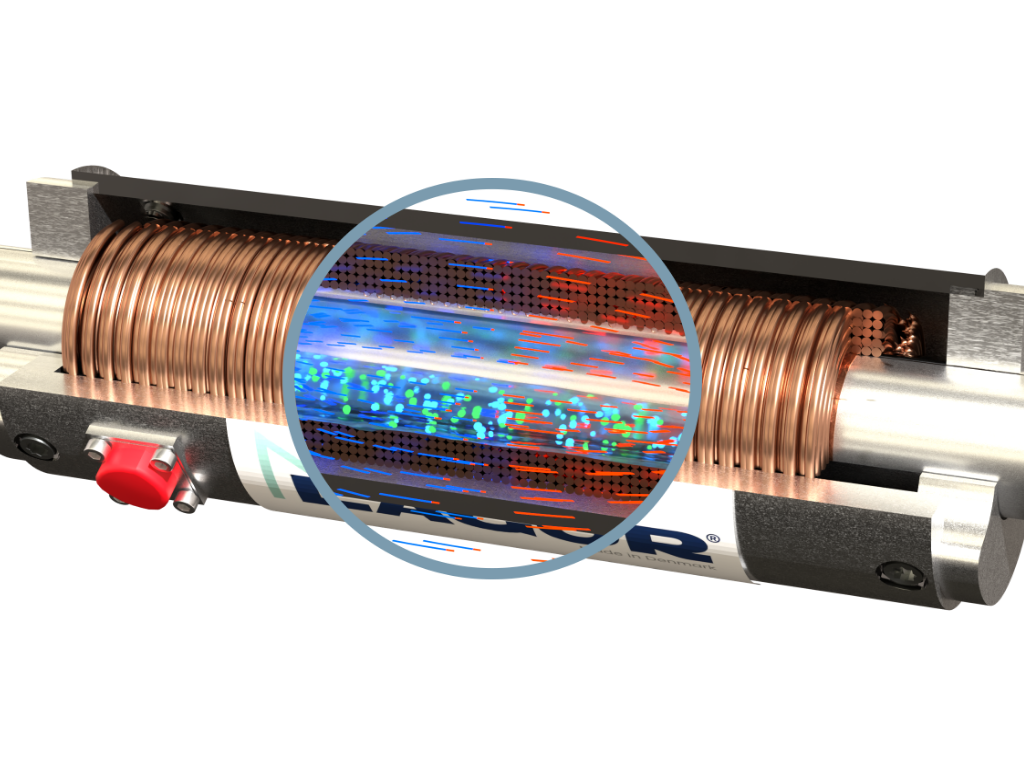
LAGUR is based on patented magnetic water treatment , which affects the way the lime precipitates – without removing the lime or the water's natural minerals.
The principle behind the technology is supported by research into the magnetic effect of limescale precipitation, while the effect of LAGUR has been investigated through various tests and analyses.
Among other things, the Danish Technological Institute has investigated limescale deposits in washing machines, GEUS has photographed the structure of limescale , Rambøll has conducted a field study, and FORCE Technology has investigated the composition of LAGUR -treated limescale .
The research behind the technology
Magnetic water treatment has long been met with skepticism. One reason was that there was a lack of a physical explanation for how a magnetic field could affect the lime after the water had left the field. At the same time, the results from previous experiments were not always reproducible.
Recent research into the crystal formation of lime has provided an explanation. Lime crystals do not necessarily form directly from free ions. Before the final crystal is formed, calcium and carbonate can exist in small, dynamic pre-nuclear clusters. These clusters are flexible and deformable and can therefore be affected as the water passes through a magnetic field.
Physicist JMD Coey described a mechanism and a specific design criterion for magnetic treatment in 2012. Here, it is not only the strength of the magnetic field that is important. The gradient of the field, the length of the treatment and the time the water is in the field also play a role.
LAGUR is constructed according to this principle with an elongated copper coil and a rapidly alternating magnetic field. The purpose is to influence the formation of limescale so that the limescale develops towards the softer aragonite rather than the harder calcite.
Want to know more about the research behind it?
Danish Technological Institute: Significantly less stuck limescale
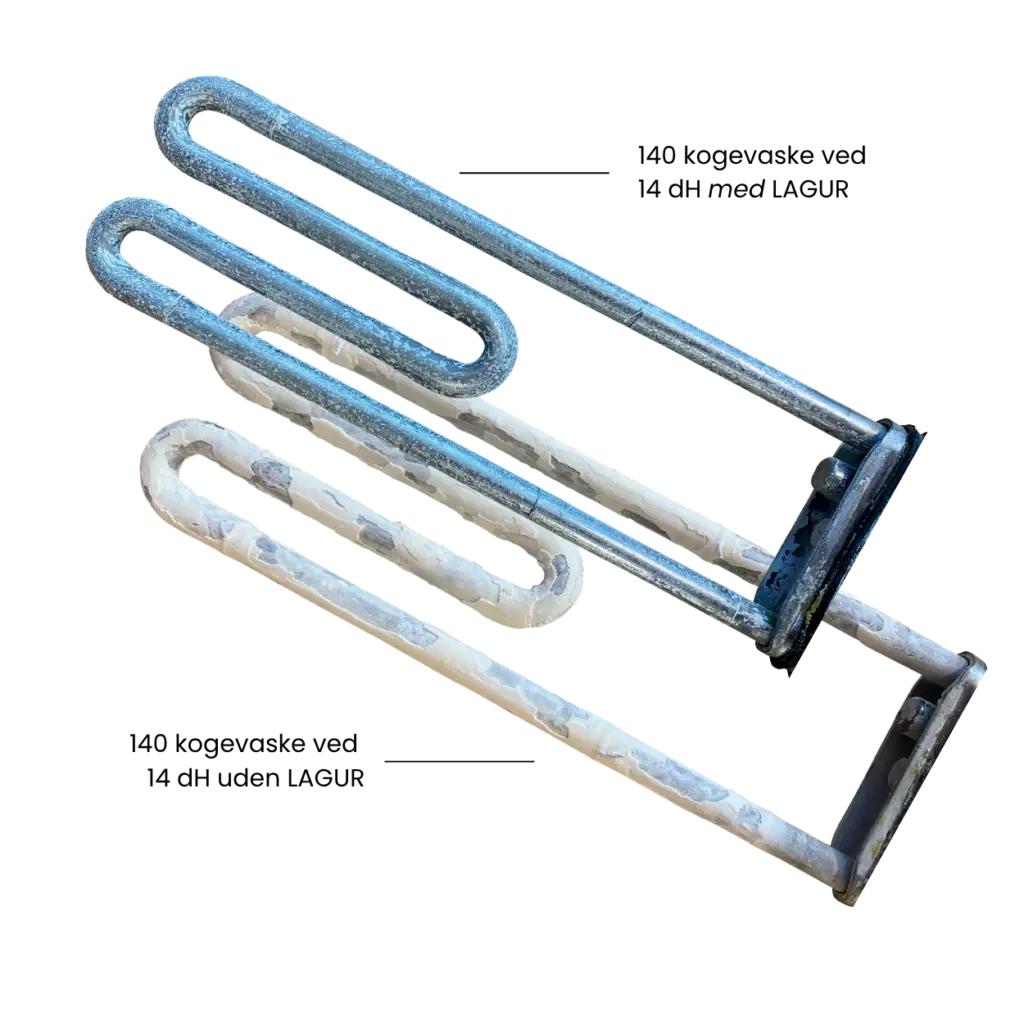
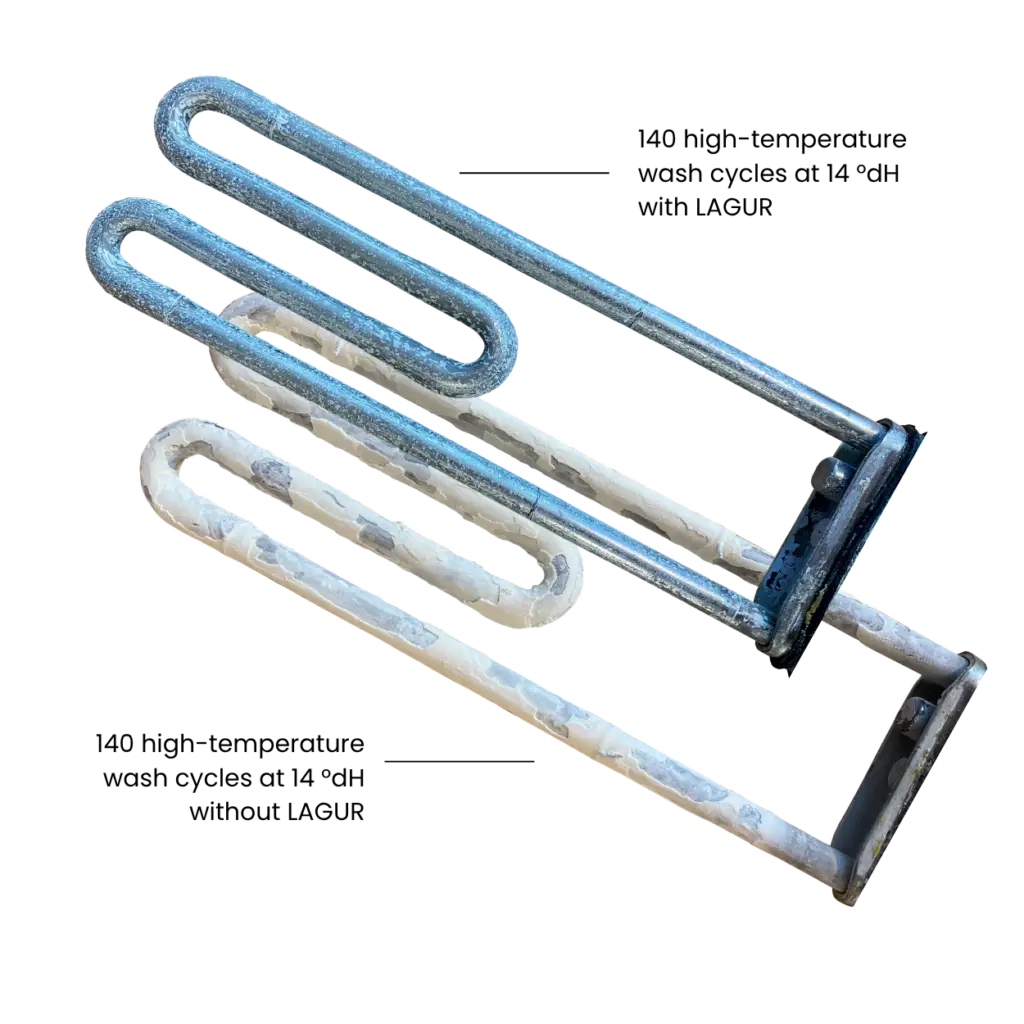
Danish Technological Institute tested LAGUR by running two identical washing machines side by side for approximately 190 hours of hot water washing at 14–15 °dH. The machine with LAGUR had significantly less limescale , and the limescale on the untreated machine was 1.2–2.1 times harder to stick to.


GEUS: Clear difference in the structure of limescale
GEUS photographed LAGUR -treated and untreated limescale with electron microscopy. The analysis showed a clear difference in the crystal structure of the lime and also showed that the effect grew with the strength of the treatment.
The SEM images show needle-shaped, fused structures in the untreated limescale while it LAGUR -treated limescale consists of more discrete, rounded or cubic crystals.
Ramboll: Softeners limescale among all surveyed consumers
Ramboll conducted a field study with LAGUR at Grauballe Waterworks.
In all four consumers studied, the limescale was transformed from hard to soft. The effect could also be measured up to 6 km from the waterworks and at least eight days after the treatment.


FORCE Technology: Larger proportion of the softer aragonite
FORCE Technology investigated LAGUR -treated limescale with X-ray analysis.
The analysis showed that the treated limescale contained more of the softer aragonite than the untreated raw water. The analysis is preliminary and will be followed up by a more thorough investigation.